
Why Do Hardwood Floors
Squeak?
That little squeak under your feet can be surprisingly annoying. Learn what causes squeaky hardwood floors, simple fixes you can try, and when to call a pro.
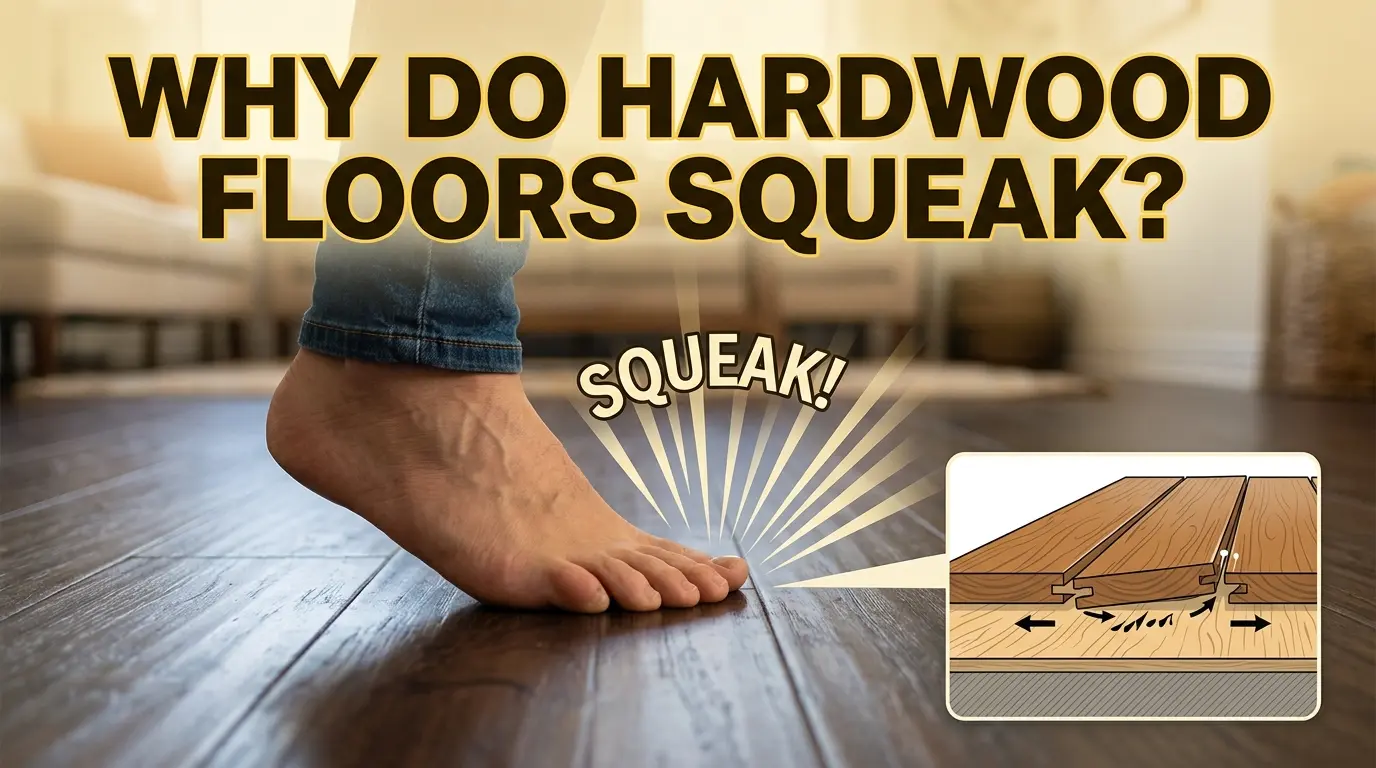
Squeaky hardwood floors are one of the most common complaints we hear from New Jersey homeowners. The good news? A squeak usually isn't a sign of serious damage. Most of the time it's just wood and fasteners rubbing against each other — but knowing the cause helps you decide whether it's a quick fix or time to call a pro.
What Makes Hardwood Floors Squeak?
A squeak is really just movement and friction. When you step on a board, it shifts slightly. If it rubs against a nail, another board, or the subfloor, you hear that familiar creak. Seasonal changes are a big cause — as wood dries in winter, boards shrink and loosen, leading to more squeaks. Loose nails, gaps between the floor and subfloor, and a subfloor that wasn't fastened properly are all common culprits.
Common Causes by Room and Season
You'll often notice squeaky floors more in winter. Dry indoor air makes wood shrink, so boards rub more easily. When humidity returns in spring, many squeaks quiet down on their own. High-traffic areas like hallways and stairs tend to squeak first. Floors over a basement or crawl space can be noisier if the subfloor flexes under weight.
Simple Fixes for Squeaky Floors
From below, adding shims between the joist and subfloor can stop movement. From above, special screws designed for hardwood can secure loose boards without visible damage. Lubricant powders like talcum or graphite reduce friction in small gaps. Keeping indoor humidity stable year-round helps limit seasonal movement. These work for minor, isolated squeaks — for widespread squeaks, call a professional.
When to Call a Professional
If a large area of your floor squeaks, the noise keeps getting worse, or you notice soft spots or visible damage alongside the squeak, have a pro inspect it. These signs can point to a subfloor or moisture issue. Kenneth's Hardwood Floors serves Bergen County, NJ and offers free, no-obligation estimates.
Frequently Asked Questions
Usually not. Most squeaks come from normal wood movement and friction. They're annoying but rarely harmful, though widespread squeaks paired with soft spots are worth a professional inspection.
Dry winter air makes wood shrink, so boards loosen and rub more. Many squeaks ease when humidity rises in spring.
Yes. Most squeaks are fixed by securing loose boards or adding subfloor support — not by replacing the floor.
Significantly. Stable indoor humidity limits seasonal wood movement, which is one of the main causes of squeaky hardwood floors.
Tired of Squeaky Floors?
Kenneth's Hardwood Floors serves Bergen County, NJ. We'll find the cause and fix it right — free estimates, no pressure.