
Should You Refinish or Replace
Your Hardwood Floors?
Not sure whether to refinish or replace? We'll walk you through the signs that point each way — and how to make the smartest investment for your floors.
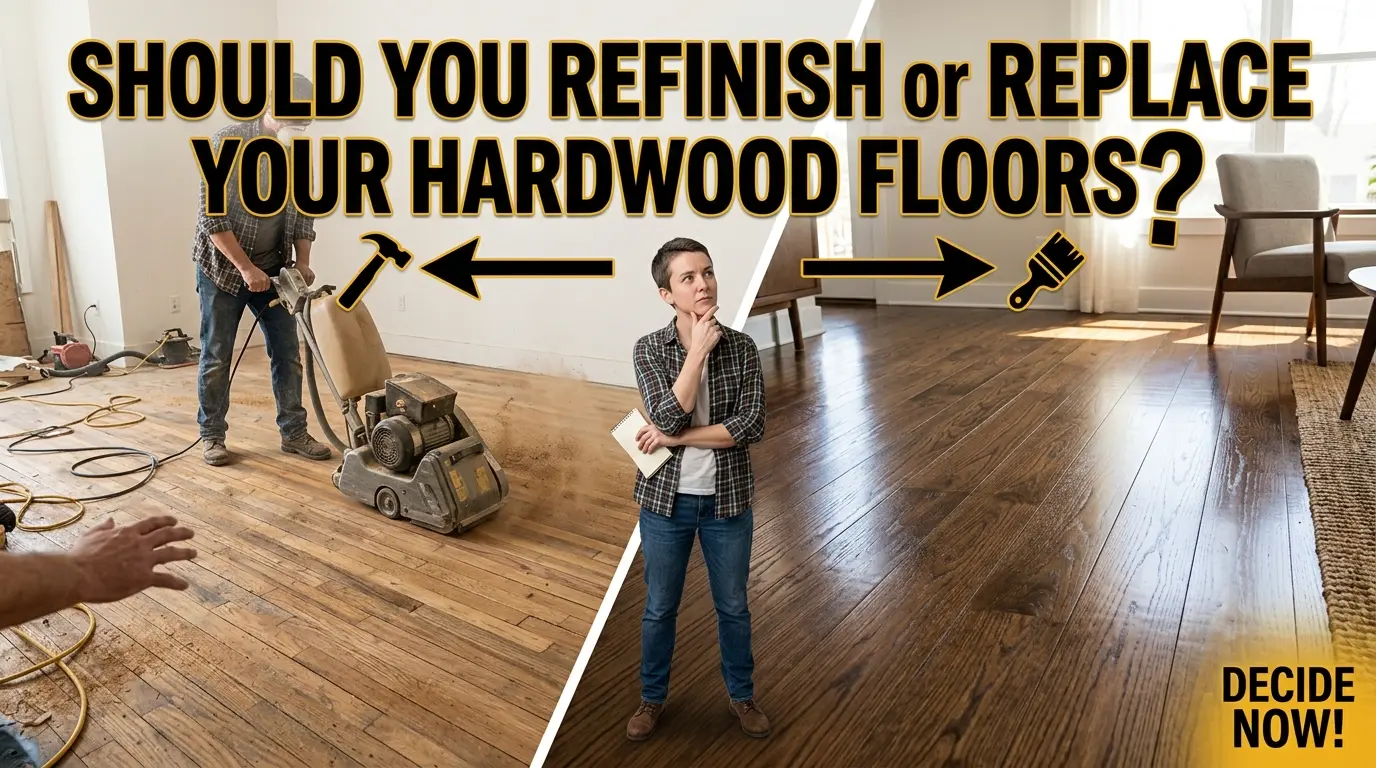
When hardwood floors start to look tired, homeowners face a common question: should I refinish or replace? Refinishing brings worn surfaces back to life at a fraction of the cost of replacement. But sometimes the boards are too far gone and replacement is the smarter investment. Knowing the difference saves you time, money, and frustration.
When Refinishing Makes Sense
Refinishing is the right call when your floors have surface-level wear — scratches, dullness, minor staining, or a finish that's peeling. If the boards themselves are structurally sound and thick enough to be sanded, they can almost always be refinished. Refinishing also lets you change the stain color entirely, which is a popular way to modernize a home without the cost of new floors.
When Replacement Is the Better Choice
Replace when boards are cracked, warped, rotting, or cupping severely. Deep water damage that has affected the wood structure typically calls for replacement. If boards are too thin from previous sandings to be sanded again, replacement is necessary. When gaps are widespread and structural rather than seasonal, new floors are usually the right answer.
Cost and Long-Term Value
Refinishing is almost always cheaper upfront — you're paying for labor and materials, not new wood and full installation. It's an excellent way to refresh your space without a major expense. Replacement costs more but can be the better long-term value if your floors are failing. Match the investment to the actual condition of your floors.
How to Tell Which Option You Need
The easiest way to know is to have a flooring professional take a look. A quick inspection can tell you whether the boards are thick enough to sand, whether damage is surface-level or structural, and what each option would cost. Kenneth's Hardwood Floors offers free, no-obligation estimates in Bergen County, NJ.
Frequently Asked Questions
Refinishing is almost always cheaper upfront since you keep the existing wood. Replacement costs more but may be better for failing or severely damaged floors.
If the boards are solid and thick enough to sand, they can usually be refinished. A professional can confirm after a quick inspection.
Solid hardwood can often be refinished several times over its life. Each sanding removes a small amount of wood, so the total depends on the board's original thickness.
Replace when boards are cracked, warped, rotting, or too thin to sand again. Deep water damage usually calls for new floors too.
Yes. Refinishing lets you apply a new stain, so you can refresh the existing tone or completely change the color of your floors.
Not Sure Whether to Refinish or Replace?
Kenneth's Hardwood Floors serves Bergen County, NJ. We'll inspect your floors and give you honest advice — free estimates, no obligation.